The Best First Day of Preschool Books for the First Goodbye
The best first day of preschool books for a 3-4 year old, matched to the fear each one calms, plus how to turn the goodbye into a ritual that works.

Minari Editor
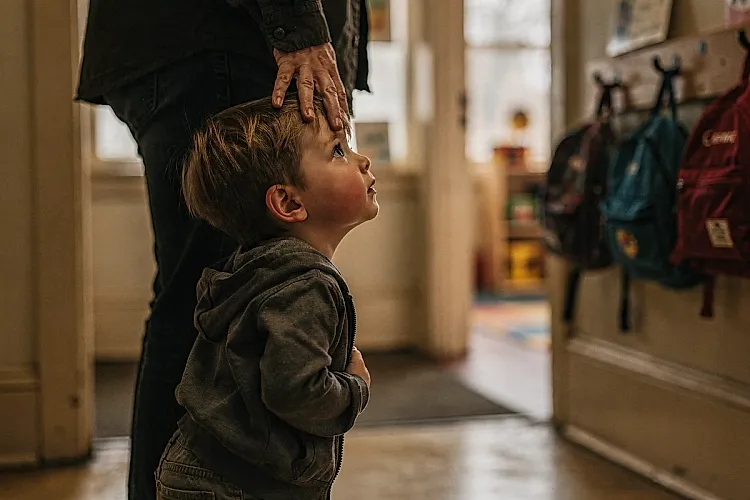
The small hand that won't let go of your leg at the classroom door. The bright, sing-song voice you're using to cover the tightness in your own throat. Every parent who has done a first preschool drop-off knows this exact moment, and most of us were not ready for how much it would ache.
That moment is what the best first day of preschool books are quietly built for. The first day of preschool is the first goodbye, the first time the world will go on for a few hours without you in it, and at three that is an enormous thing to ask. A good book lets your child rehearse the goodbye before either of you has to live it for real. The strongest picks for this age, listed below, each answer a different version of the same fear, which is exactly how to choose between them.
Why the first day of preschool is really one fear
A pediatric rule of thumb is that very young children live almost entirely in the present. A three-year-old does not yet have a reliable internal clock, so "I'll be back after lunch" is close to meaningless — which is why the American Academy of Pediatrics advises framing return times using recognizable daily events ("after nap time and before snack") rather than clock times. This is the root of preschool separation anxiety, and it is why the day can feel so frightening: not because the room is scary, but because the time stretches out with no visible end. Call it the long middle, the endless-feeling gap between the goodbye and the reunion.
A book shrinks the long middle by giving the day a shape. When a child meets a character who hugs goodbye, plays and paints and naps through a whole preschool day, and is scooped up again at the end, they have lived the arc once already, safely, from your lap. The ending is the part that matters, which is why the picks below lean toward books with a clear, satisfying reunion. The pickup on the page is a rehearsal for the pickup in real life. The best books about going to preschool always come back around to the pickup, because that reunion is the entire reassurance a three-year-old is asking for.
This is also why a book lands where a pep talk slides off. You can promise a nervous toddler that you will return, but the promise is abstract. A story makes it concrete: here is a character who missed their mama, and here is the moment their mama came back, exactly as promised.
The best first day of preschool books
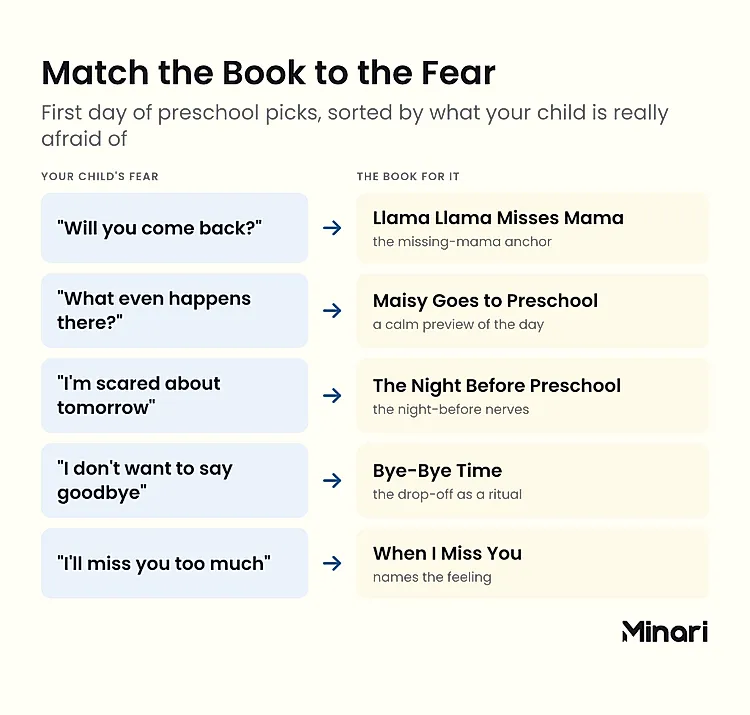
These are the books for the first day of preschool to read aloud in the week before it starts, organized by the particular fear each one answers. Every pick is chosen for the three-to-four-year-old who is leaving you for the first time, not for an older child starting school. Parents sometimes search for these as first day of school books for preschool, but books about first day of preschool deserve their own, gentler shelf, and that is what this list is.
"Will you come back?" → *[Llama Llama Misses Mama](https://bookshop.org/books/llama-llama-misses-mama/9780593116715)* by Anna Dewdney. Baby Llama's first morning at preschool is wobbly and teary until he discovers the room is full of things to do and friends to meet, and then Mama returns right on schedule. It is the definitive missing-mama book, and the one to reach for if your child's whole worry is the separation itself.
"What even happens there?" → *[Maisy Goes to Preschool](https://bookshop.org/p/books/maisy-goes-to-preschool-lucy-cousins/11181311)* by Lucy Cousins. Maisy walks calmly through an entire preschool day, hanging up her coat, painting, singing, resting, and going home. There is no drama here on purpose. For a child whose fear is the sheer unknown of the place, a gentle preview of the ordinary routine is the most calming thing you can offer.
"I'm scared about tomorrow" → *[The Night Before Preschool](https://bookshop.org/p/books/the-night-before-preschool-natasha-wing/c357055fad6bff9b)* by Natasha Wing. Little Billy is so nervous the night before that he can barely sleep, and the book follows him through the jitters into a day that turns out fine. Reading it the evening before gives those bedtime nerves a place to go.
"I don't want to say goodbye" → *[Bye-Bye Time](https://bookshop.org/p/books/bye-bye-time-elizabeth-verdick/d89ee1516e6fd510)* by Elizabeth Verdick. This sturdy board book is built around the drop-off itself, turning the goodbye into a calm, doable little ritual: wave, blow a kiss, and trust that the grown-ups will keep you safe. It is the most practical book on this list for a child who falls apart specifically at the door.
"I'll miss you too much" → *[When I Miss You](https://bookshop.org/books/when-i-miss-you/9780807589038)* by Cornelia Maude Spelman. A small guinea pig names the exact feeling of missing a parent and learns simple things to do with it while they're apart. It gives a child language for an emotion that otherwise comes out only as tears.
"Maybe it'll be fun?" → *[Pete the Kitty's First Day of Preschool](https://bookshop.org/p/books/pete-the-kitty-s-first-day-of-preschool-james-dean/19647846)* by James Dean and Kimberly Dean. Pete approaches his first day with his trademark easy cool, and the whole book reframes preschool as an adventure rather than a loss. Keep one upbeat pick like this in the mix so the week before isn't all heavy feelings.
If you want a wider shelf of read-aloud favorites for this age beyond the first-day theme, our list of the best books for 3 year olds covers the broader range, part of our wider age-by-age guide to toddler books.
The week before preschool is also when a calm bedtime matters most, because a rested, settled child handles a big morning far better than an overtired one. Our free seven-night story collection sends one illustrated bedtime story to your inbox each evening. Use it as the steady wind-down each night in the run-up, with your chosen preschool book as the centerpiece of the ritual.
Let us handle bedtime for you. 7 stories. 7 nights. Free.
One illustrated story in your inbox each evening — plus a Wonder Question to spark the kind of conversation that only happens at bedtime.
No spam. One story per night for 7 nights.
How to handle the goodbye
The book does half the work. The drop-off does the other half, and the single most useful thing to know is this: keep the goodbye short and the same every time. Children settle faster when the parting is brief and predictable, and a long, anxious goodbye tends to read to a child as proof that something is wrong. Borrow a goodbye phrase or a small gesture from whichever book you've been reading, a blown kiss or a "see you after snack," and use the exact same one every single morning. The ritual becomes the thing your child can count on.
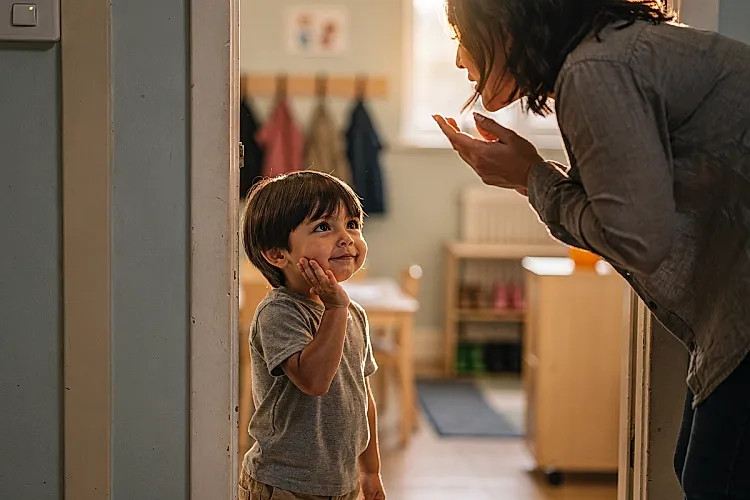
A few more things help. Read the book several calm nights before the first day, not over a rushed breakfast that morning. Re-read it as many times as your child asks, because the repetition is the preparation. And let yourself feel your own version of the first goodbye, that lump in your throat when you turn to leave. That ache is allowed. Just keep it off your face long enough to walk out the door with a smile, because your steadiness is the loudest reassurance in the room. If the big feelings resurface at bedtime, as they often do after a hard day, our collection of bedtime stories about feelings is made for that quieter hour.
Starting kindergarten, not preschool?
If your child is heading to kindergarten or a new elementary school rather than preschool, the worry shifts. It's less about the goodbye and more about being a big kid in a room full of strangers, which calls for a different set of books. Our guide to the best first day of school books covers that older stage.