The Best Books for 4-Year-Olds (Chosen for How They Think, Not Just What They Like)
The best books for 4 year olds: picture books chosen for the way four-year-olds actually think, from cause and effect to opinions to stories they'll retell to you.

Minari Editor
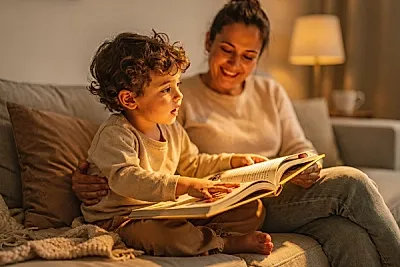
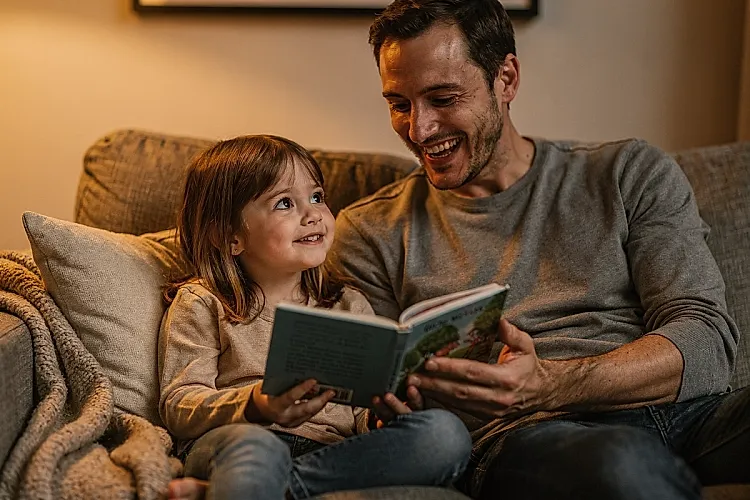
You've read this book a hundred times. You know every line. And tonight, without thinking, you swap one word — "big" instead of "huge" — and from the other side of the pillow, a small voice says: "That's not what it says."
They're right. It isn't.
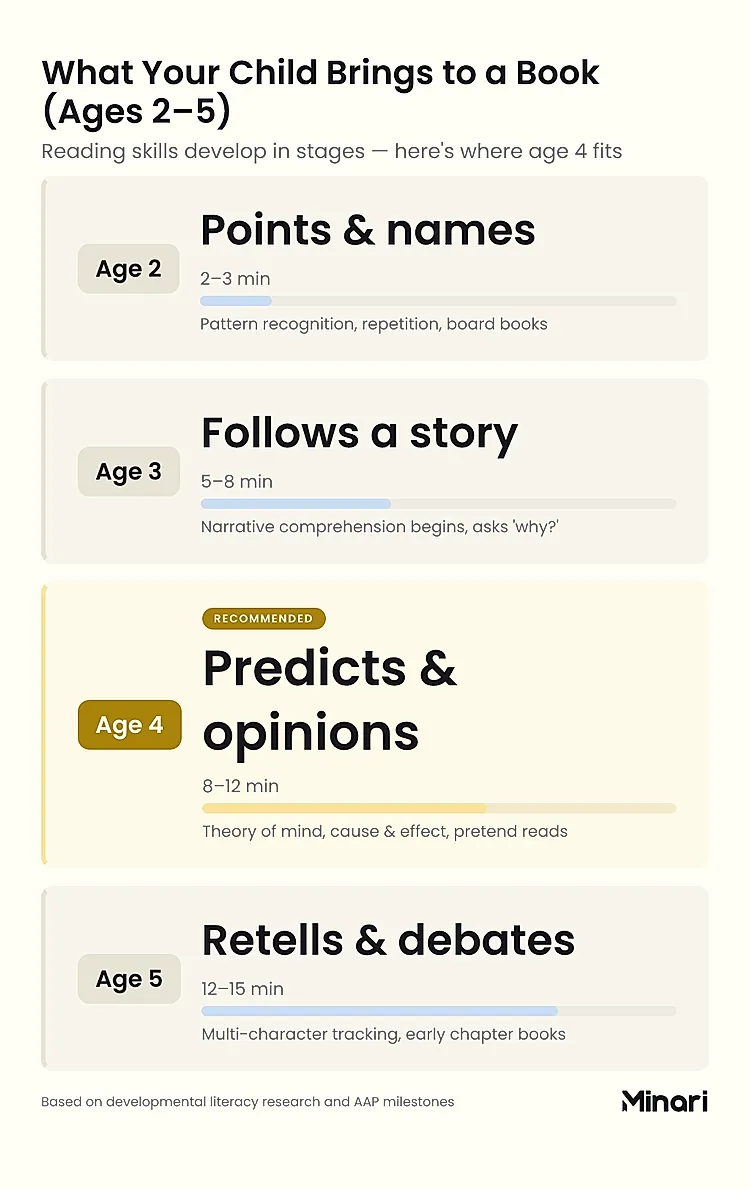
That correction — that insistence on the exact text — is the first sign your four-year-old's relationship with books has fundamentally changed. They're tracking every word now, holding the story in memory, and comparing what you say against what they know is true. This is what reading comprehension looks like before a child can actually read, and it's the stage in the toddler reading arc where everything accelerates.
The best books for 4 year olds are built for this new brain: stories with enough complexity to reward that attention, characters with enough depth to have opinions about, and enough humor to make the whole thing feel like play. Here are seven that match how your child thinks right now.
What Makes a 4-Year-Old Reader Different?
Around age four, something clicks that changes how your child experiences a story. Psychologists call it theory of mind: the understanding that other people (and characters) can think and feel differently than you do. When your 3-year-old heard a story about a sad bear, they felt sad too. Your 4-year-old asks why the bear is sad, and then tells you what the bear should do about it.
This shift unlocks entire categories of stories that wouldn't have worked a year earlier: tales about misunderstandings, unlikely friendships, characters who make mistakes and learn from them. Books that depend on the reader understanding two perspectives at once, the kind that were too complex at three, suddenly click.
At the same time, your 4-year-old is developing a sharper sense of cause and effect. "If you give a mouse a cookie, he's going to want a glass of milk" works because it's a logical chain your child can now follow and predict. They'll start guessing what happens next, and they'll be annoyed when they're wrong. That annoyance is critical thinking in action.
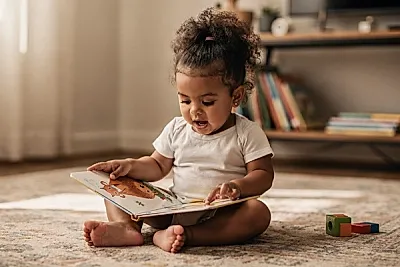
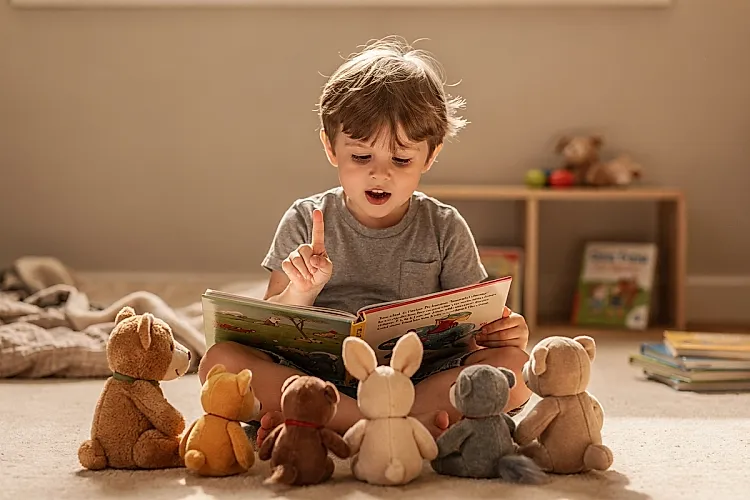
And then there's the pretend read. You'll notice it one afternoon: your four-year-old picks up a book, opens it on their lap, and "reads" it to a row of stuffed animals. They're narrating the story from memory, using the pictures as prompts, doing the voices. This is one of the strongest pre-literacy signals a child can show. They've internalized the structure of narrative (beginning, middle, end) and they're performing it.
We call the opposite behavior the correction: when your child catches you skipping a word, changing a line, or turning two pages at once. Their memory for story text is precise enough to notice deviations. That precision is active comprehension, and it's new at four.
A 4-year-old who picks up a book, opens it on their lap, and narrates the whole story to a stuffed animal audience using different voices for each character? That's not a child playing. That's a reader being built.
7 Books for 4-Year-Olds That Match How They Think Now
These picks are chosen for the specific cognitive tools your four-year-old is building: perspective-taking, cause-and-effect reasoning, humor, and the beginning of independent taste. Each one earns its place by doing something a simpler book can't.
Corduroy by Don Freeman
A bear sitting on a department store shelf wants a home. A girl named Lisa wants the bear. The story is simple enough for a 4-year-old to follow independently and emotionally complex enough to generate real conversation: why doesn't anyone buy Corduroy? Why does Lisa want him when his button is missing? Published in 1968 and still working because it treats a child's capacity for empathy with total seriousness. Find it on Bookshop.org
The Day the Crayons Quit by Drew Daywalt, illustrated by Oliver Jeffers
Every crayon in Duncan's box writes a letter explaining why they quit. Red is tired of working holidays. Blue is exhausted. Peach won't come out of the box because someone peeled his wrapper off and he feels naked. This is the book that makes four-year-olds do different voices for each crayon, because they're inhabiting multiple perspectives simultaneously. That's theory of mind in action, disguised as comedy. Find it on Bookshop.org
If You Give a Mouse a Cookie by Laura Numeroff, illustrated by Felicia Bond
The original cause-and-effect chain book, and the one that teaches 4-year-olds to predict what happens next. Give a mouse a cookie and he'll want milk. Give him milk and he'll want a straw. The circular logic is hilarious at this age because your child can now track the chain, and they'll start predicting the next link before you turn the page. That prediction is reading comprehension, practiced without a single reading lesson. Find it on Bookshop.org
Chrysanthemum by Kevin Henkes
A mouse with a long, unusual name loves it — until she starts school and other kids make fun of it. Henkes handles the social cruelty honestly (no softening) and the resolution is earned, not handed to her. Four-year-olds who are entering or approaching preschool recognize the social dynamics immediately: the teasing, the wanting to fit in, the relief when someone validates you. It's the rare picture book that treats a child's social pain as real. Find it on Bookshop.org
If your reading routine could use a few fresh stories matched to this stage, we put together a week of illustrated tales. One in your inbox each evening, built for the attention span and comprehension of a 4-year-old listener.
Let us handle bedtime for you. 7 stories. 7 nights. Free.
One illustrated story in your inbox each evening — plus a Wonder Question to spark the kind of conversation that only happens at bedtime.
No spam. One story per night for 7 nights.
Owl Moon by Jane Yolen, illustrated by John Schoenherr
The quiet pick. A father and child walk through snowy woods at night, looking for owls. Nothing dramatic happens — and that's the entire point. At three, this book would lose your child by page four. At four, something has shifted: they can hold the tension of waiting, track the mood through Schoenherr's Caldecott-winning watercolors, and feel the payoff when the owl finally appears. The restraint of the pacing matches a 4-year-old's emerging ability to delay gratification in a narrative, to trust that the story knows where it's going. Find it on Bookshop.org
Julián Is a Mermaid by Jessica Love
Julian sees three women dressed as mermaids on the subway and wants to become one. He uses curtains, flowers, and ferns to transform himself. When his abuela sees him — this is the moment — she doesn't correct him. She takes him to the Mermaid Parade. A three-year-old enjoys the pretty pictures. A four-year-old reads the abuela's face and understands what she's choosing not to say. That's theory of mind applied to a moment of acceptance that most adults would struggle to articulate. This is the book four-year-olds bring up weeks later, unprompted. Find it on Bookshop.org
Enemy Pie by Derek Munson, illustrated by Tara Calahan King
A boy's dad makes a special pie to get rid of enemies — but the recipe requires spending an entire day being nice to the enemy first. Four-year-olds who are navigating new social worlds (preschool, playdates, neighborhood kids) get the twist before it arrives: spending the day together is the recipe. The dad's gentle engineering of friendship is the kind of parenting four-year-olds notice and trust. Find it on Bookshop.org
A note on what's not here: we left off The Very Hungry Caterpillar and Brown Bear, Brown Bear. Both are important books — for two-year-olds. By four, your child has moved past counting and naming into understanding characters, consequences, and relationships. If those earlier picks are still favorites, wonderful. But the books above are what four-year-old brains are hungry for now.
How Reading Changes at 4 (and What to Do About It)
The biggest shift at four is that your child wants to participate. Reading is no longer a performance where you talk and they listen. It's becoming a conversation.
Research by Dickinson and Porche (*Child Development*, 2011) found that children exposed to rich, interactive book conversations at age 4 showed significantly stronger vocabulary and reading comprehension at school entry, more so than children who received direct letter-and-sound instruction alone. Story IS the learning.
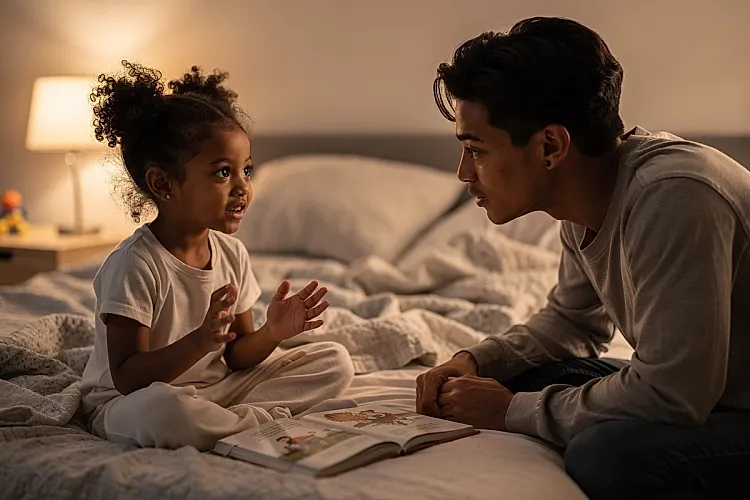
Here's what that looks like practically:
Ask prediction questions. "What do you think happens next?" invites your child to practice cause-and-effect reasoning out loud. When they're wrong, that's even better. The surprise teaches them that stories can outsmart them, which keeps them coming back.
Let them retell. After finishing a book, ask your child to tell you the story. The pretend read (that narration they perform for stuffed animals) is the same skill, formalized. Retelling builds narrative structure, sequencing, and memory. It's the single most underrated pre-literacy activity.
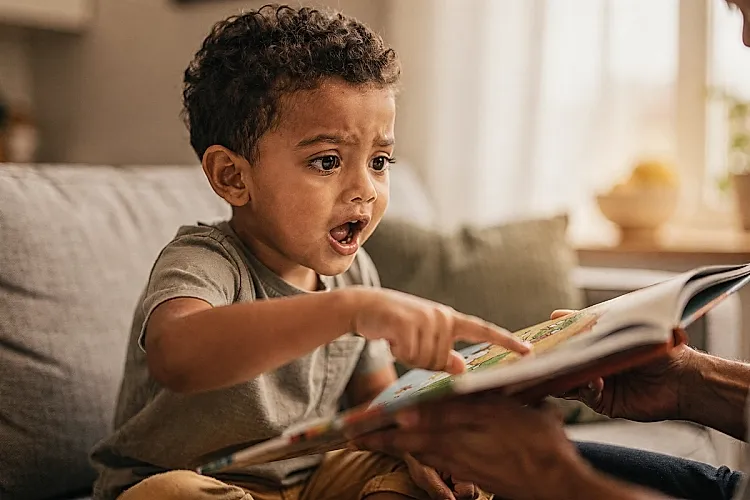
Follow their questions. When your 4-year-old stops mid-page to ask "but is the bear ACTUALLY sad, or is he pretending?", that's theory of mind in action. Don't redirect them to the text. Follow the question. The conversation that unfolds is doing more work than the book alone.
And here's the question parents at this stage always ask: should I be doing something more "educational"? The answer, consistently supported by research, is no. The best educational books for 4 year olds are the ones that tell stories rich enough to generate questions, opinions, and conversation. Narrative comprehension IS the skill that predicts reading success. If you're looking for stories specifically built for bedtime at this age, the principles are the same: books that invite interaction, not just attention.
Frequently Asked Questions
Tonight, when a small voice from the other side of the pillow corrects a word you thought you'd gotten away with changing — don't fix it. Smile. Because that child is holding an entire story in their memory, comparing it against what they're hearing, and defending the version they know is right.
That's the thing that becomes reading. And the book they're guarding so fiercely? It's already theirs.