The 7 Best Books for 5-Year-Olds (When to Try Chapter Books)
The best books for 5 year olds: picture books and first chapter books chosen for the way five-year-olds think, debate, and start reading on their own.

Minari Editor
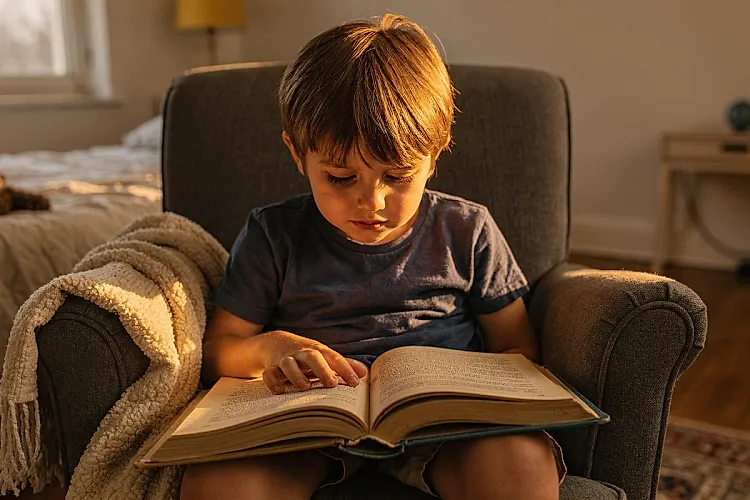
Your five-year-old pushes a picture book across the table and says: "I want a longer one."
Your instinct is to find a chapter book. Something with pages that prove they're growing up. Something that looks like what older kids read.
Here's the thing: the best books for 5 year olds are deeper, not longer. A great picture book at five handles moral ambiguity, open-ended questions, and emotional complexity that most early chapter books can't touch. And the chapter books that do work at this age succeed not because they're long, but because they're paced for a brain that's just learning to carry a story across days instead of minutes.
Both formats belong on the shelf right now. Here are seven books that prove it, plus how to know when your child is ready to bridge from one to the other.
What Makes a 5-Year-Old Reader Different?
The leap from four to five is less visible than the earlier shifts in the reading arc but more significant. Your 5-year-old's attention span has stretched to roughly 12–15 minutes, enough for a full chapter book session. They can track multiple characters, follow subplots, and hold a story in their mind between reading sessions. When your child asks at breakfast, "but what happened to Charlotte?", they're carrying a fictional world with them. That's a cognitive skill that didn't exist a year ago.
This is what we'd call the chapter book question: the moment every parent of a 5-year-old arrives at. "Are they ready?" The answer comes down to one signal: can they carry a character's problem from one session to the next? If the story matters enough to remember at breakfast, they're ready.
At five, your child is also beginning to navigate moral complexity in stories. At four, characters were good or bad. At five, characters can be good and make bad choices. They can be wrong for the right reasons. This opens up stories that don't wrap up neatly — and five-year-olds are drawn to these like magnets, because they're starting to notice that real life doesn't wrap up neatly either.

And then there's the independent page. It arrives without announcement: your child looks at a book they've heard a hundred times and reads a word out loud. Not sounding it out. Recognizing it. They've seen "the" or "and" or "bear" so many times that the shape of the word has become a word. No one taught them. It's what happens when a child has been so saturated with text that the code starts cracking itself.
The first word a 5-year-old reads is almost never in a workbook. It's in the book they love most.
7 Books for 5-Year-Olds That Bridge Picture Books and Chapter Books
These picks include both picture books and chapter books, deliberately. At five, your child needs both: picture books for depth and emotional complexity, chapter books for narrative endurance. The mix below respects that.
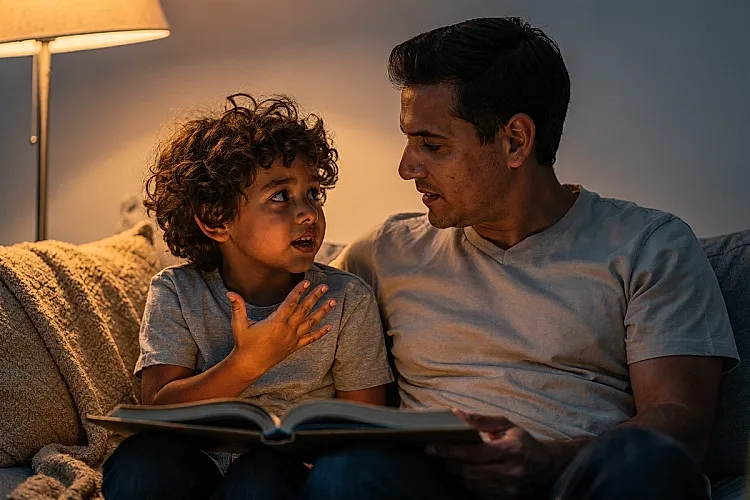
Charlotte's Web by E.B. White, illustrated by Garth Williams
The first chapter book that matters. Charlotte the spider saves Wilbur the pig through cleverness and sacrifice, and then she dies. Five-year-olds understand exactly what's happening — and they need to talk about it. This is the book that teaches children stories can break your heart and still be worth reading. Read it aloud over a week, one chapter per night, and watch what happens at breakfast. Find it on Bookshop.org
The Giving Tree by Shel Silverstein
This is the book five-year-olds argue about — and that's why it belongs here. Is the tree happy? Is the boy selfish? Should the tree have said no? There's no right answer, which is exactly what makes it perfect for this age. Five-year-olds are developing the capacity to hold two interpretations at once and to feel uncomfortable with ambiguity. This book gives them a safe place to practice that. Find it on Bookshop.org
Strega Nona by Tomie dePaola
A Caldecott Honor picture book that works like a fable. Strega Nona warns Big Anthony not to touch her magic pasta pot. He does. Pasta fills the town. The lesson is obvious, and then dePaola adds a twist that makes it less obvious. Five-year-olds love the slapstick of the overflowing pasta, but they also sense the deeper question: was Big Anthony's punishment fair? That's moral reasoning, disguised as a pasta flood. Find it on Bookshop.org
The Dot by Peter H. Reynolds
A girl who thinks she can't draw makes a single dot on a piece of paper. Her teacher frames it. That permission — that "start with what you have" — unlocks everything. This is the shortest book on this list and the one that generates the most action: five-year-olds who hear it immediately want to make their own dot. The story works because it trusts the reader to do something with it. Find it on Bookshop.org
If you're building evening reading time around this stage, we put together a set of illustrated stories. One in your inbox each night for a week, paced for the 5-year-old who wants both depth and routine.
Let us handle bedtime for you. 7 stories. 7 nights. Free.
One illustrated story in your inbox each evening — plus a Wonder Question to spark the kind of conversation that only happens at bedtime.
No spam. One story per night for 7 nights.
Mercy Watson to the Rescue by Kate DiCamillo, illustrated by Chris Van Dusen
The perfect first chapter book for kids who aren't sure about chapter books. Mercy Watson is a pig who loves toast with butter — and who accidentally saves the day. Short chapters, generous illustrations, and a narrative voice so warm and funny that reluctant listeners forget they're hearing a "longer book." DiCamillo knows exactly how much text a 5-year-old can handle between pictures, and she gives them exactly that much. Find it on Bookshop.org
Extra Yarn by Mac Barnett, illustrated by Jon Klassen
A girl finds a box of yarn that never runs out. She knits sweaters for everyone and everything in her cold, gray town, and the town transforms. When a villain steals the box, it comes back empty. For him. The magic only works for her, and the book never explains why. Five-year-olds sit with that ambiguity in a way they couldn't at four. They don't demand an answer, they just feel that some things are true for some people and not others. Caldecott Honor, 2013. Find it on Bookshop.org
The Barnabus Project by The Fan Brothers
The underdog pick. Barnabus is a half-mouse, half-elephant created in a lab, kept in a bell jar, marked as "failed." He dreams of the outside world — and one night, he escapes. The illustrations are breathtaking (the Fan Brothers paint like 19th-century naturalists) and the themes (identity, belonging, the courage to leave what's safe) are the ones five-year-olds are living. This book is harder to find but the kids who encounter it don't forget it. Find it on Bookshop.org
A note on what's not here: we left off The Very Hungry Caterpillar, Brown Bear, and most of the Sandra Boynton catalog. Those books did their job beautifully, starting from the very first board book, and your five-year-old has grown past them. If they still reach for an old favorite occasionally, that's comfort reading, and it's perfectly healthy. But the books above are where their brain is now.
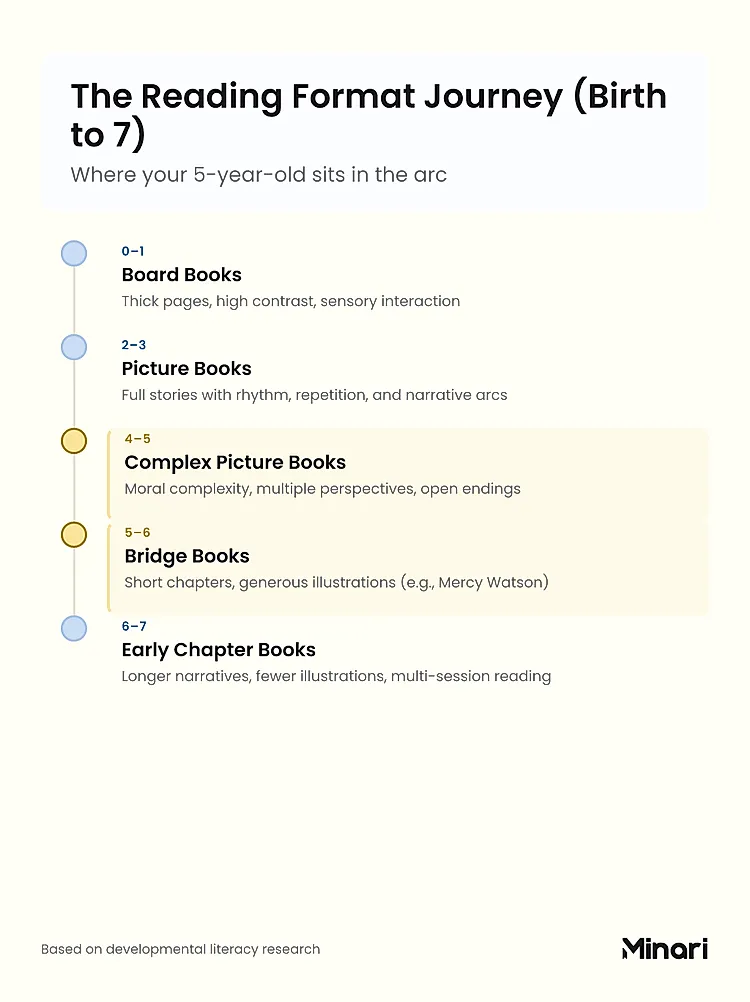
How to Know When Your 5-Year-Old Is Ready for Chapter Books
Three signals. You need all three, not just one.
They remember yesterday's chapter. If you read chapter one at bedtime and they ask about it at breakfast, unsolicited, not prompted, they can carry a narrative across time. This is the fundamental skill that makes chapter books work. Picture books resolve in one sitting. Chapter books require trust that the story will continue tomorrow.
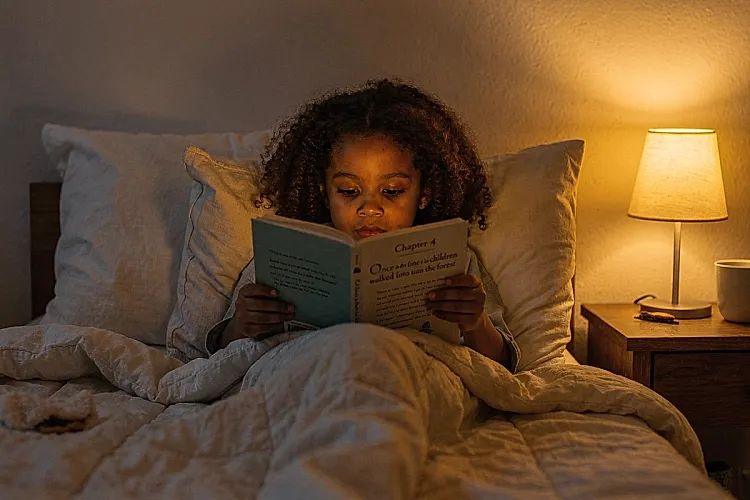
They ask about characters between sessions. "Is Wilbur going to be okay?" at dinner. "Does Mercy Watson get more toast?" in the car. When characters become people your child thinks about when the book is closed, the chapter book format has something to offer that picture books can't.
They tolerate pages without pictures. Not happily — tolerates. If they flip ahead looking for the next illustration but keep listening, they're ready. If they disengage entirely when the pictures stop, give it another few months and try again with a more heavily illustrated chapter book like Mercy Watson.
The key insight: chapter books and picture books aren't sequential stages. They're parallel tracks. Most five-year-olds need both: picture books for bedtime stories that calm the body down, chapter books for daytime reading that builds narrative endurance. You don't retire picture books when chapter books arrive. You let them coexist.
And here's a fact that reassures every parent worried about the transition: research consistently shows that children who continue hearing read-alouds after they start reading independently develop stronger comprehension and vocabulary than those who switch entirely to independent reading (Mol & Bus, *Psychological Bulletin*, 2011). Reading to your 5-year-old is rocket fuel.
Frequently Asked Questions
That evening when your five-year-old pushes the picture book away and asks for something longer — they're reaching for the next version of the thing they've loved since you first held a board book close enough for small eyes to see.
The longer book will come. It might be Charlotte and her web, or a pig who loves toast, or a box of yarn that never runs out. But the impulse — the wanting more, the reaching — that came from every story you read before this one.
You didn't hold them back. You built the floor they're standing on.