What Kind of Bedtime Stories Do 5-Year-Olds Actually Love?
Five-year-olds need stories that match their growing imagination and attention span. Here's how to pick bedtime stories they'll ask for again and again.

Minari Editor
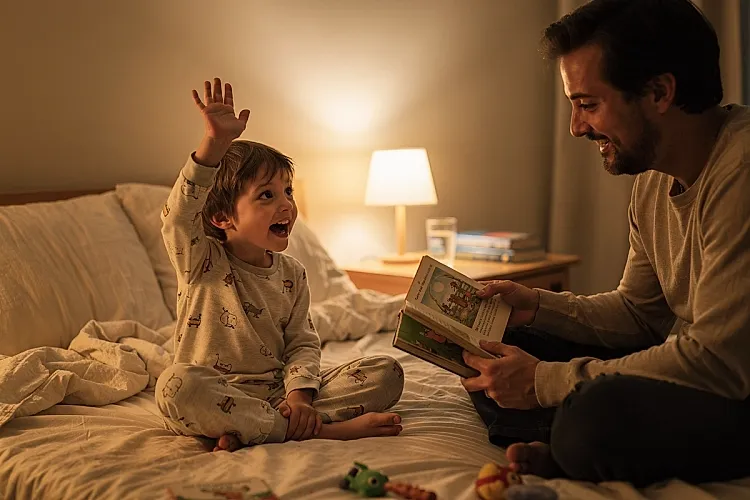
Two pages into Goldilocks, your 5-year-old interrupts: "I already know what happens. The bear is going to eat the porridge." They grin. They want you to be impressed.
This is new. A year ago, they listened. Now they predict, question, argue with characters, and insist on the same story four nights running. The bedtime stories that worked at three don't always land — and the ones that do are different in ways worth understanding.
Here's what actually matters when choosing bedtime stories for this age, and why getting it right makes bedtime easier, not harder.
What makes a bedtime story work for a 5-year-old?
At five, your child's brain is doing something remarkable. They can hold a narrative arc in their head — beginning, middle, end — and they notice when a story breaks its own rules.
Research on early literacy development suggests that between ages 4 and 6, children shift from understanding stories as a series of events to grasping cause and effect within narratives. That's a huge leap.
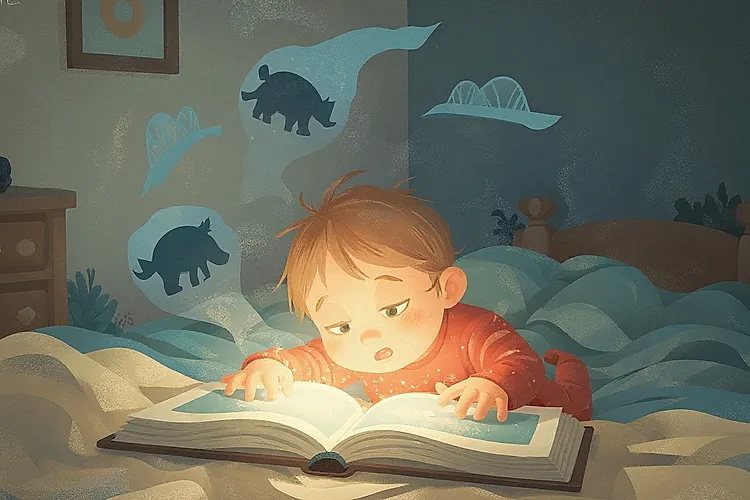
What this means for bedtime: stories that felt right at three (simple repetition, single-scene setups, board books with one sentence per page) now feel too easy. Your 5-year-old wants characters who make choices. They want to know why the dragon is grumpy, not just that the dragon exists.
Some books become what teachers call cracked-spine books — picked so many times the binding goes soft. Your child doesn't return to these because of the pictures or the routine. They return because a character feels like a friend. (If you're building a shelf of these, our best books for 5-year-olds covers daytime reading too.)
The Kissing Hand by Audrey Penn has this quality for many kindergarteners: the ritual of pressing a kiss into a palm gives them something to physically do after the story ends. Interrupting Chicken by David Ezra Stein has it too. The humor of a character who can't stop interrupting mirrors exactly what 5-year-olds do.
If you're also reading to a 4-year-old, the good news: bedtime stories for 4- and 5-year-olds overlap significantly. The shift happens around story complexity, not vocabulary. A 4-year-old enjoys the same books; they just experience them differently.
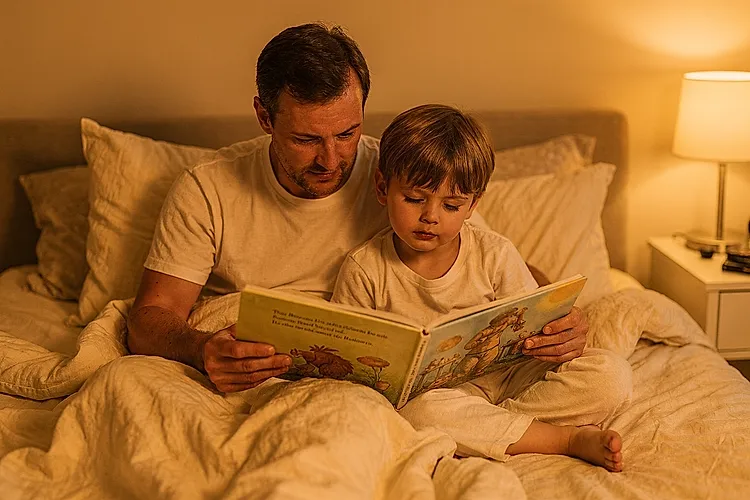
How long should a bedtime story be at this age?
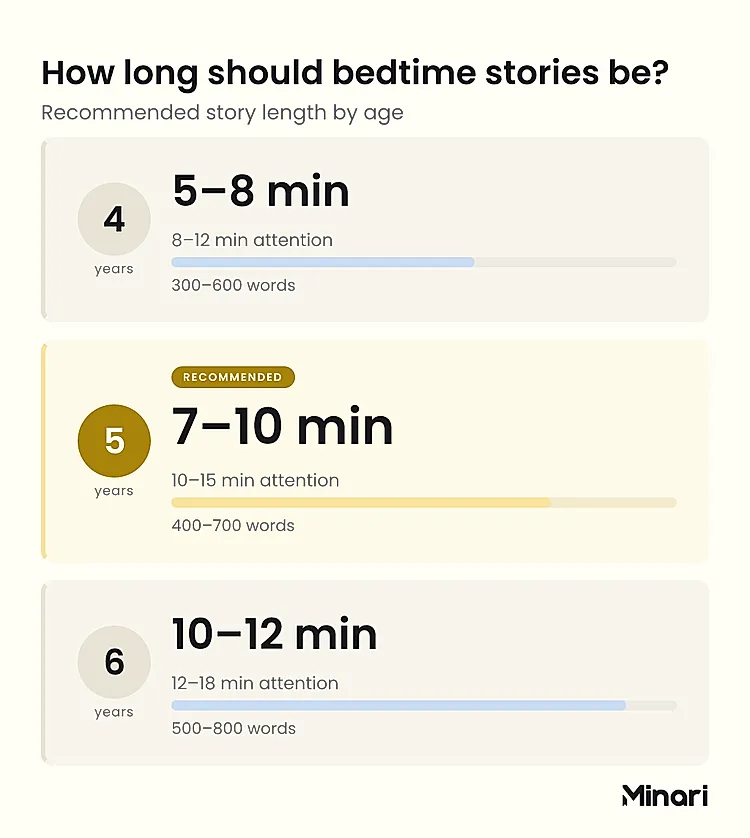
Five to ten minutes. That's the window.
Child development research estimates that children can sustain focused attention for roughly 3–5 minutes per year of age, so about 15–25 minutes for a 5-year-old in an ideal setting. But bedtime is wind-down time — they're processing a full day.
A story that fits inside 5–10 minutes lands in the sweet spot: long enough for a real narrative, short enough that it doesn't overstimulate.
Short bedtime stories for 5-year-olds are the right tool for this moment. A 500–1,000 word picture book read at a calm pace takes about 5–8 minutes. That leaves room for the question your child will inevitably ask ("But what happened to the dragon AFTER?") and for the lights-out transition.
On busy nights, even shorter works. Five-minute bedtime stories for 5-year-olds (a single scene, a funny premise, a satisfying ending) can be the difference between a smooth bedtime and a battle.
Quick bedtime stories are stories that respect the moment.
The trick is the stopping point. End on a calm beat, not a cliffhanger, and the story does half the work of settling your child down.
What kinds of stories do 5-year-olds ask for again and again?
At a kindergarten in Austin, a teacher keeps a low shelf of her students' cracked-spine books — the five titles picked so many times the covers curl. Three of them aren't on any bestseller list. One is about a pigeon who really wants a hot dog. Another is about a bear who discovers a mysterious hat situation. The third is a self-published story about a dinosaur who's afraid of the dark.
What these books share: humor, a strong personality, and a problem the child can understand.
Here's what five-year-olds gravitate toward, by genre:
Humor and silliness. This is the peak age for slapstick appreciation and emerging wordplay. The Book With No Pictures by B.J. Novak is practically engineered for this — the adult is forced to say ridiculous things, and the child holds all the power.
Quick bedtime stories with a funny twist land especially well on nights when your child is wound up.
Adventure with stakes. Not real danger, but a quest, a mystery, a "what if." Dragons Love Tacos by Adam Rubin gives them a premise so absurd it feels like an adventure. The Three Billy Goats Gruff works because there's genuine tension (the troll) with a guaranteed resolution.
If your shelf could use a few cracked-spine candidates, we put together a week of illustrated bedtime stories for exactly this age. One in your inbox each evening.
Let us handle bedtime for you. 7 stories. 7 nights. Free.
One illustrated story in your inbox each evening — plus a Wonder Question to spark the kind of conversation that only happens at bedtime.
No spam. One story per night for 7 nights.
Fairy tales, adapted. Classic fairy tales still resonate at five, but shortened or modern retellings hold attention better than unabridged versions. Goldilocks and the Three Bears works beautifully at this age because 5-year-olds understand the rule-breaking and find it hilarious.
"Stories about me." Around age five, children become fascinated by stories where they see themselves — their name, their interests, their world.
Personalized stories, where the main character shares your child's name or loves the same things they do, tap into this developmental moment in a way generic stories can't.
How to build a bedtime reading routine that sticks
The routine matters more than any individual book. A 2015 study in *Sleep* that tracked 10,085 families across 14 countries found a clear pattern: the more nights per week children followed the same routine, the faster they fell asleep, the fewer times they woke, and the longer they slept overall.
The formula is simpler than most parenting advice suggests:
Same time. Within a 15-minute window is fine. Rigidity isn't the point; predictability is.
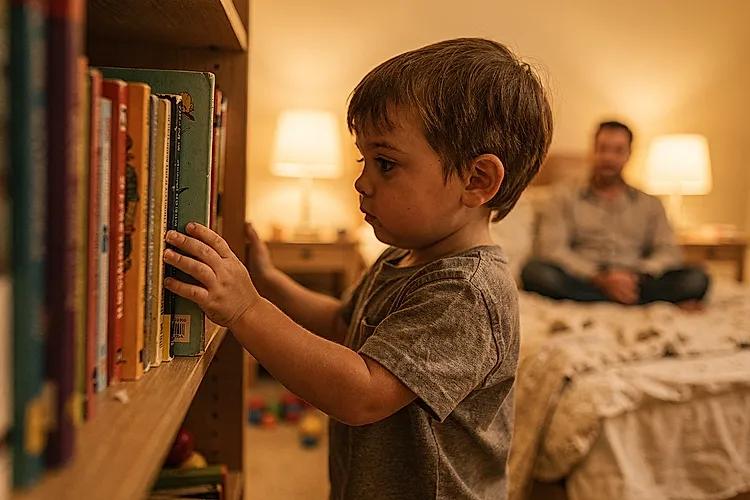
Child chooses. Let your 5-year-old pick the book. Even if it's the same one they picked last night. And the night before.
This is the victory lap — when a 5-year-old returns to the same story, they're proving they know what happens next. Each re-read builds prediction skills, deepens comprehension, and gives them the confidence to tackle harder books.
Research suggests that repeated reading of the same text builds vocabulary retention significantly faster than exposure to new texts at this age (University of Sussex, 2011).
Keep it short. One book. Maybe two if they're short. The goal is a calm transition, not a reading marathon. On nights when everything is running late, even a 5-minute bedtime story (three minutes, one scene) preserves the routine without the pressure. And if your child is dealing with a hard day, a bedtime story about feelings can do more than a calm-down technique ever will.
"One of the reasons reading to children is so powerful is it's often a one-on-one experience between parents and children where children have your full attention."
A 5-year-old interrupts The Kissing Hand to press her own palm against her mom's cheek. She's not following the book's instructions. She's improvising — turning a story into something that belongs to her. That's what five looks like. The story is doing its work.
Frequently Asked Questions
Tonight, when they interrupt to tell you what happens next — let them. They're not derailing the story. They're inside it. And the book whose spine is going soft from being chosen every single night? That's a cracked-spine book, doing exactly what it was made to do.