The Short Bedtime Stories Kids Ask for Again and Again
Short bedtime stories are the smart play. Here's how to pick the right ones for your child's age, mood, and the 10 minutes you actually have tonight.

Minari Editor
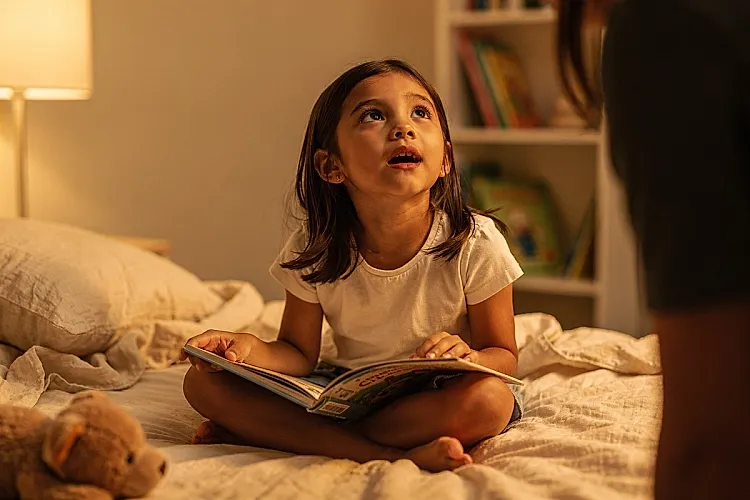
There are more children's stories available right now than at any point in human history. Thousands of them. Free apps, library shelves, online collections that scroll forever.
And yet most families rotate the same three or four books at bedtime.
The problem is finding the right short ones: the bedtime stories for kids that do their work in five pages instead of fifty, that match how your child actually listens at the end of a long day, and that somehow get requested again tomorrow.
Short bedtime stories pull their weight. Research from a 2015 study published in Sleep, covering 10,085 families across 14 countries, found that the consistency of a bedtime routine matters more than its length. A short story read every night builds more than a long one read twice a week, a finding that anchors our full bedtime stories for kids guide and everything in it.
Here's what separates a short bedtime story for kids that sticks from one that just fills time.
Why short bedtime stories often work better than long ones
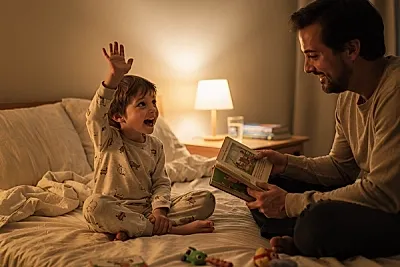
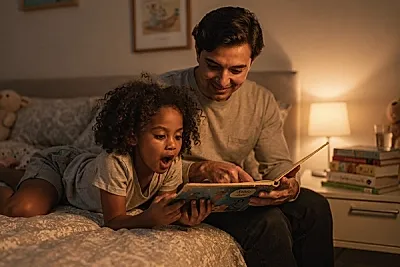
A parent tries a chapter book at bedtime. The child is interested on page one, fidgeting by page four, and gone by page seven. Next night, the same parent reads a five-page picture book. On the last page, the child gasps. Then whispers, "Again."
That's how children's attention works at the end of the day.
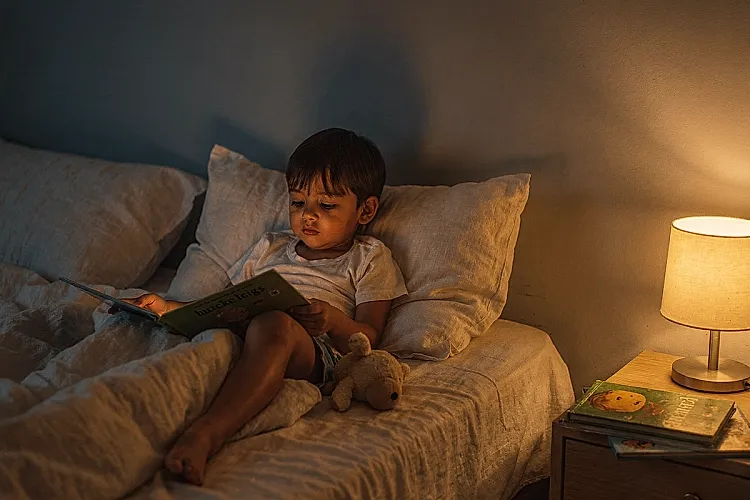
By bedtime, your child's cognitive resources are at their lowest. The focus they had at breakfast — for puzzles, for building, for asking why fourteen times — has been spent. What's left is enough for a short burst of genuine engagement, not a marathon. And a short bedtime story for kids that lands inside that window does more than a long story that overshoots it.
The research backs this up. A 2019 study in the *Journal of Developmental and Behavioral Pediatrics* found that children read one book per day hear approximately 290,000 more words by age five than those who aren't read to, and it's the daily habit, not the session length, that drives the gap. Five pages every night compounds faster than thirty pages on Saturday.
Here's a concept worth knowing: the landing page. In every great short bedtime story, there's one page — one spread — where the emotional payload arrives. It's the page where Goodnight Gorilla reveals the gorilla followed the zookeeper home. The page where Owl Babies finally see their mother return. Long stories have landing pages too, but they're sometimes buried under plot. Short stories can't hide theirs.
You're not cutting corners by choosing short. You're reading smarter.

How to pick a short bedtime story that fits tonight
Not every short story works every night. The right one depends on three things: your child's age, their energy level right now, and what kind of day it was.
By age, the match shifts:
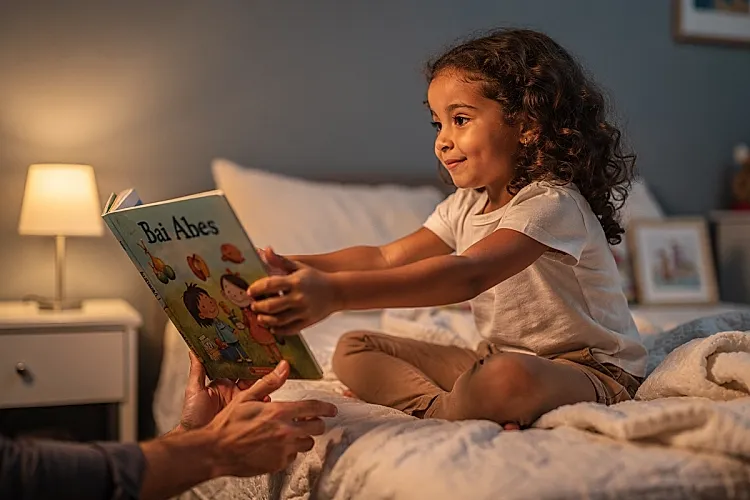
- Toddlers (2-3) need rhythm and repetition: stories with refrains they can chant along with, pages they can point at. Think board books with a single sentence per spread.
- Preschoolers (4-5) need a small arc: a problem that gets solved, a character that changes, something that satisfies in under 10 pages. They want to know what happens.
- Early readers (6-8) need a character they root for. Even in a short story, the protagonist needs to want something. These kids can handle a twist, a joke that builds, or an ending that surprises.
By energy level, the strategy changes:
Picture this: a four-year-old has been bouncing on the bed for twenty minutes. You hand her Where the Wild Things Are. She rumpuses along with Max, growling at the wild things — and by the last page, where Max's supper is waiting, she's still. The book met her where she was and walked her somewhere quieter.
A wired child doesn't need a whispered lullaby book. They need a funny or physical story that matches their energy and then brings it down. A drowsy child is already halfway there; they need a rhythmic, calming story to carry them the rest of the way.
By mood, the story does different work. A hard day calls for a story about feelings, not to "teach a lesson," but to show your child that characters feel big things too. An exciting day calls for a story that matches the energy before guiding it toward quiet.
Some books that do this well, across these variables:
Where the Wild Things Are by Maurice Sendak is the classic arc from wild to calm in 338 words — perfect for the wired child who needs to rumpus before they rest. Owl Babies by Martin Waddell handles separation anxiety in 32 pages of pure reassurance, ideal for a child who had a hard goodbye that day. And The Rabbit Listened by Cori Doerrfeld, a book most parents haven't encountered, tells a child what to do when something goes wrong, in spare, minimal language that lets the pictures carry the emotion. It's the underdog that belongs on every bedtime shelf.
For age-specific picks, see our guides to bedtime stories for 3-year-olds and bedtime stories for 5-year-olds.
What makes a short story memorable, not just quick
Not all short stories are created equal. Some are long stories crammed into fewer pages — the retelling of Cinderella that tries to hit every plot point in three spreads and lands with the emotional weight of a summary. Others were written to be short. The difference matters at bedtime.
A great short bedtime story has three qualities:
A single clear emotion. Not three themes and a moral. One feeling (comfort, silliness, wonder, reassurance) that arrives whole and doesn't need explaining afterward.
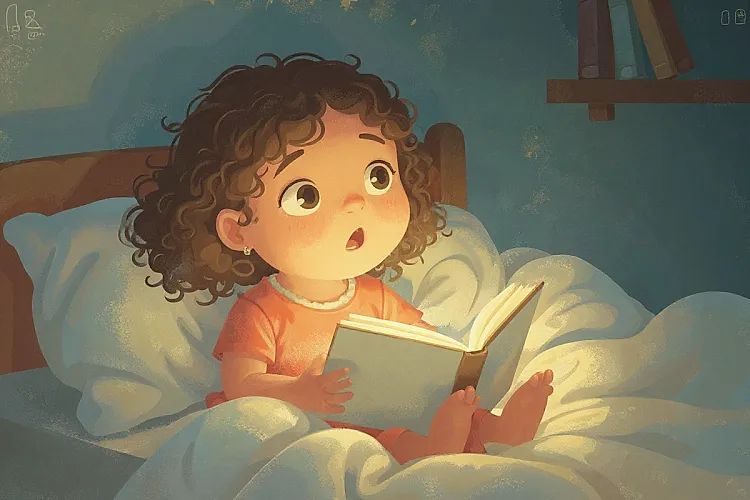
Language that rewards rereading. The sentences in Guess How Much I Love You or Time for Bed by Mem Fox aren't just readable once. They have a cadence that becomes a ritual — words your child starts mouthing along with by the third night.
An ending that settles. The final page should feel like a sigh, not a cliffhanger. Short bedtime stories that end with resolution (a character safe, a world at rest, a quiet image) guide the transition from awake to asleep.
"The single most important activity for building the knowledge required for eventual success in reading is reading aloud to children."
That holds whether the story is five pages or fifty. But a short story with a clear landing page — one spread where the emotional core hits — often lands harder than a long story that distributes its impact across dozens of pages. Think of Goodnight Gorilla: the entire book builds to one visual gag on one page. Your child will remember that page for years.
A child who can recite the last line of their favorite short story isn't showing off memorization. They're showing you where the landing page is.
Building a short-story bedtime routine that lasts
The best bedtime reading routines are predictable.
Keep a curated shelf of 5-7 short books at your child's eye level, and let them pick. Rotate monthly: swap two or three titles to keep it fresh, but leave the favorites. Letting your child choose builds autonomy, and autonomy builds reading identity. A child who picks their own bedtime story is a child who's starting to think of themselves as a reader.
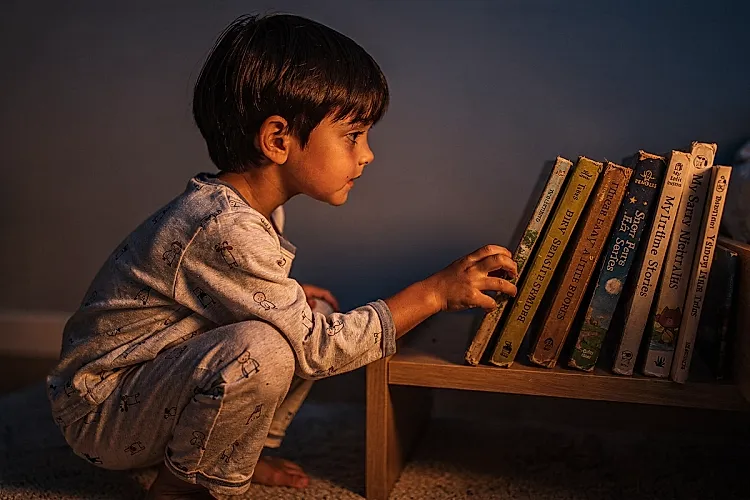
Here's a trick worth trying: the "two short" rule. Two 3-minute stories work better than one 10-minute story for most kids under six. The first story is for energy: silly, fun, whatever they grab. The second is for settling: something rhythmic, familiar, calming. A three-year-old who picks Where the Wild Things Are first and Time for Bed second has just built a complete arc from wild to quiet, in under seven minutes, entirely on her own terms.
The variety plus repetition creates a reliable ritual without the monotony of a single long read. And by the second book's final page, you'll hear it: your child mouthing the words along with you, eyes half-closed, voice trailing into a whisper. That's a kid who owns this story.
For time-specific strategies, our guide to 5-minute bedtime stories breaks down exactly why that length is the sweet spot for busy nights.
You don't need to build a whole library to start this. Seven stories — one for each night of the week — is enough to create a rotation your child looks forward to.
Let us handle bedtime for you. 7 stories. 7 nights. Free.
One illustrated story in your inbox each evening — plus a Wonder Question to spark the kind of conversation that only happens at bedtime.
No spam. One story per night for 7 nights.
Frequently Asked Questions
Tonight, when your child reaches for the same short book they've picked three nights running, pay attention to the page where they go quiet. That's the landing page. That's where the story does its work.
It won't take long. It never does.