Picture Books About Feelings That Actually Build Empathy (and Kindness)

Minari Editor

You are three pages from the end of the story when your child goes quiet. Not bored-quiet. The other kind. Their eyes are fixed on the page where the small character stands alone at the edge of the playground, and you watch something move across your child's face that you did not put there. Their chin wobbles. "Is he sad?" they ask, in a smaller voice than they were using a minute ago. They are not asking about themselves. For maybe the first time, they are aching for someone else.
That ache is the whole reason the best picture books about feelings are worth choosing on purpose. A board book can show a child a sad face to match. A story does something larger: it sets a child down inside a character and lets them feel the feeling from the inside out. That is how empathy and kindness are actually built, not by instruction but by rehearsal. The six picks below, from We're All Wonders to My Magic Breath, each hand your child a different piece of that work.
Why a story does what a feelings chart can't
Hand a toddler a board book and you help them name what they feel. That inward work matters enormously, and it is exactly what our guides to books about feelings for toddlers and books about emotions for preschoolers are built for. But somewhere around three or four, a second, outward-facing skill becomes possible: feeling with someone else. Noticing that the boy on the page is lonely, and minding that he is. That skill is empathy, and a story is the single best tool we have for growing it.
Here is why a narrative outperforms a chart. A feelings poster shows an emotion from the outside, like a specimen pinned to a card. A story drops a child into a character's shoes and walks them through the whole arc, the wanting, the setback, the hurt, the repair. Reading fiction is, in a real sense, a simulation of social experience: psychologists have found that the more story narrative children are read, the stronger their theory of mind — their ability to understand that other people have thoughts and feelings different from their own. The story is a flight simulator for the heart.

That is what I mean by the empathy rehearsal. Every time your child lives a feeling from inside a character, they take a practice run at perspective-taking, in a safe place where no one's actual feelings are on the line. Then, some real afternoon when a classmate's tower falls and crumples their face, your child has already been there before, in a book. The rehearsal was run weeks ago, in your lap. Good social emotional picture books are simply the ones that give a child the richest, truest rehearsals.
The most natural empathy rehearsal you already own is the nightly story. Our free seven-night collection sends one illustrated bedtime story to your inbox each evening, a steady, low-stakes slot to run exactly the kind of rehearsal this whole article is about, one story at a time, with your child in your lap.
Let us handle bedtime for you. 7 stories. 7 nights. Free.
One illustrated story in your inbox each evening — plus a Wonder Question to spark the kind of conversation that only happens at bedtime.
No spam. One story per night for 7 nights.
The best picture books about feelings
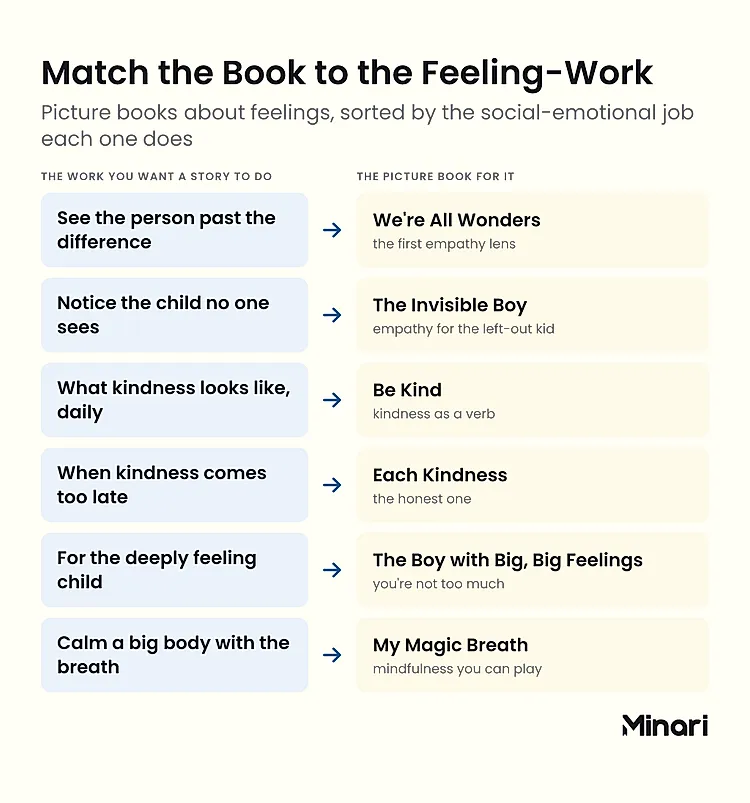
These six picture books about feelings each do a specific piece of social-emotional work. You don't need all six. Choose by the work you want a story to do right now.
"Seeing the person past the difference" → *[We're All Wonders](https://bookshop.org/books/we-re-all-wonders/9781524766498)* by R.J. Palacio. From the author of Wonder, this is the picture-book-aged door into the same idea: Auggie, a boy who looks different, knows he is, underneath, an ordinary kid who wants what every kid wants. There is no villain here and no hard lesson, just the lens itself handed over gently, that everyone you meet is a whole person with a whole inside. That gentleness is why it earns the first slot, the empathy picture book to read before a child is ready for the ache of the harder titles below.
"What kindness actually looks like" → *[Be Kind](https://bookshop.org/books/be-kind/9781626723214)* by Pat Zietlow Miller. A girl watches a classmate spill grape juice and be laughed at, and spends the book turning over a big question: what does it actually mean to be kind? Miller refuses the easy answer and lands somewhere better, that kindness is small, daily, and sometimes quietly hard. The kindness picture book that treats kindness as a verb.
"Noticing the child no one sees" → *[The Invisible Boy](https://bookshop.org/books/the-invisible-boy/9781582464503)* by Trudy Ludwig. Brian is so quiet that the illustrator draws him in grey while the other children are in color — until Brian's own small kindness toward a new classmate begins to bring color back into his world. Children feel this one in their chest. It is the empathy picture book for teaching a child to notice the kid at the edge of the playground, the very ache the best stories switch on.
"The honest one about a missed chance" → *[Each Kindness](https://bookshop.org/books/each-kindness/9780399246524)* by Jacqueline Woodson. A new girl arrives, is quietly frozen out, and then is gone before the chance to be kind comes back around. This Woodson book is braver than most: it lets the kindness arrive too late, and lets that ache sit. For a slightly older child (five and up), it does something no tidy story can, showing that kindness has a window, and windows close.
"For the deeply feeling child" → *[The Boy with Big, Big Feelings](https://bookshop.org/books/the-boy-with-big-big-feelings/9781506454504)* by Britney Winn Lee. A boy feels everything enormously, others' sadness, his own joy, a loud truck going by, until the day he learns to let some of those big feelings out, and finds that his huge heart is the very thing that lets him understand everyone around him. For the tender kid who cries at the sad part, it quietly reframes a trait the world calls "too much" into the gift it actually is. A quiet underdog that the right family will treasure.
"Calming the body with the breath" → *[My Magic Breath](https://bookshop.org/books/my-magic-breath-finding-calm-through-mindful-breathing/9780062687760)* by Nick Ortner and Alison Taylor. An interactive mindfulness picture book that asks a child to blow each worried, grumpy thought off the page, one slow breath at a time. It turns self-regulation into a game a three-year-old can play, and gives the whole family one shared tool for a hard moment.
From empathy to kindness: the bridge a story builds
Empathy is where it starts, but it is not where a parent wants it to stop. Feeling sad for the lonely boy is lovely; walking over to sit with him is the point. The distance between those two things is what I think of as the kindness bridge, and dramatizing that crossing is a picture book's quiet superpower.
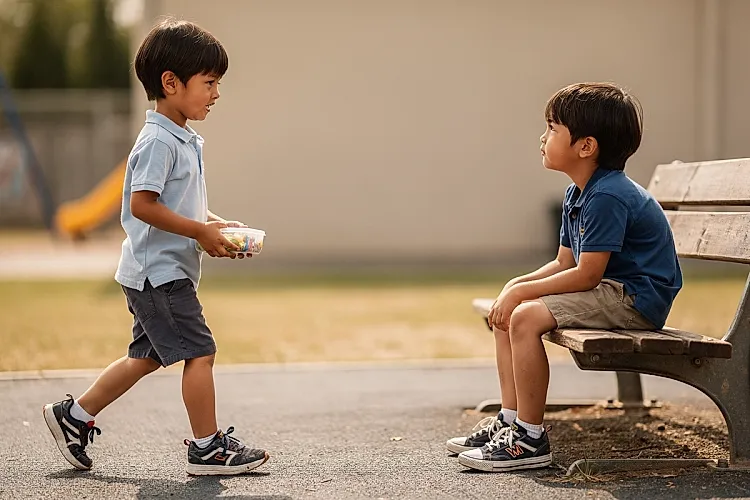
This is why Each Kindness is so unforgettable. Most kindness picture books let the hero cross the bridge in time and feel good about it. Woodson makes a braver choice: her narrator feels the pull toward kindness, hesitates, and misses the window entirely. A child closing that book understands, in their body and not as a rule, that noticing a feeling is only half of it, that empathy is the beginning of kindness and not a substitute for it. Be Kind and The Invisible Boy walk the same span from the hopeful direction, showing a small action, a saved seat, a hello, that turns a feeling into a gift someone else can actually hold.
When you read these, you can make the bridge visible with a single question at the end: "What did she do about how she felt?" That tiny pivot, from feeling to doing, is the difference between a child who is sensitive and a child who is kind.
How to read a feelings picture book so it grows empathy
Owning the right book is the easy half. How you read it is what turns a story into empathy, and the rule is almost the opposite of what instinct suggests: read to wonder, not to lecture. The fastest way to kill the empathy in a story is to land the plane with "and that's why we're nice to everyone." A child can smell a lesson coming and will close the door on it. Let the story do the teaching while you stay curious alongside them.
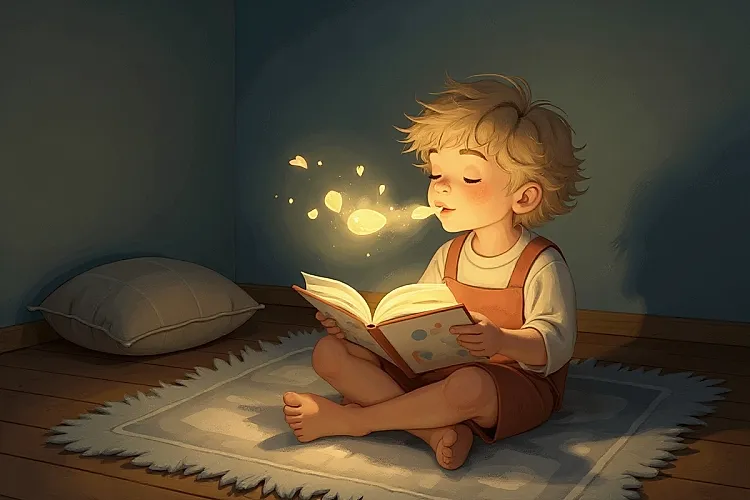
A few habits make it work. Ask, don't tell. "How do you think he feels? Have you ever felt like that? What would you do?" Questions keep your child inside the character's experience instead of grading it from outside. Notice the body on the page, the slumped shoulders, the turned-away face, since reading a body is where empathy literally begins. Re-read the ones that land, because the rehearsal deepens with repetition, not with novelty. And for the mindfulness picture books, actually do the thing: take the slow breath from My Magic Breath together, so the calm lives in the body and not just the page. Then let it go. You don't need a moral. The ache your child already felt three pages from the end is the lesson, arriving on its own.

What age are picture books about feelings for?
The sweet spot is roughly three to seven, the years a child can follow a narrative and hold another person's perspective at the same time. Below that, around two and three, the work is more about naming a child's own feelings, which is where board books and the face-matching stage come in. At the older end, seven and up, the same books still earn their place, the conversations just grow more searching. Wherever your child sits in that range, the move is the same: pick the story for the social-emotional job, then read it to wonder.