How to Choose the Best Children's Picture Books: A Parent's Guide (2026)

Minari Editor
Choosing the right picture book isn’t about what’s most popular—it’s about what helps your child learn, feel, and love reading. This guide will walk you through what to look for, how to match books to age/stage, and where to find the best new, diverse, and meaningful titles in 2025.
💡 If you want a ready-made set of quality stories that combine strong art, relatable themes, and age-appropriate language, the Lola Lamb Gift Set is curated for children ages 3–6 and made for families who want substance with joy.
Key Takeaways
- Find picture books that align with your child’s age, stage, and personality—infants benefit from high-contrast images, while early readers read short sentence structure and simple plots.
- Prioritize illustration quality: vivid, expressive art supports comprehension, mood, and visual literacy.
- Use trusted awards and lists: ALA Notable Children’s Books, 100 Picture Book List, Coretta Scott King, etc.
- Representation matters: books by or about BIPOC authors/illustrators are increasing but still not fully reflective of society.
- Read aloud—frequently. Even 15 minutes a day boosts vocabulary, listening comprehension, and emotional connection.
Don't forget to check out our list for the best picture books about friendship (ages 3-7).
What Makes Great Children’s Picture Books Stand Out
Parents often wonder: “What separates a good picture book from a great one?”
The best picture books for kids share these five qualities that make storytime unforgettable.
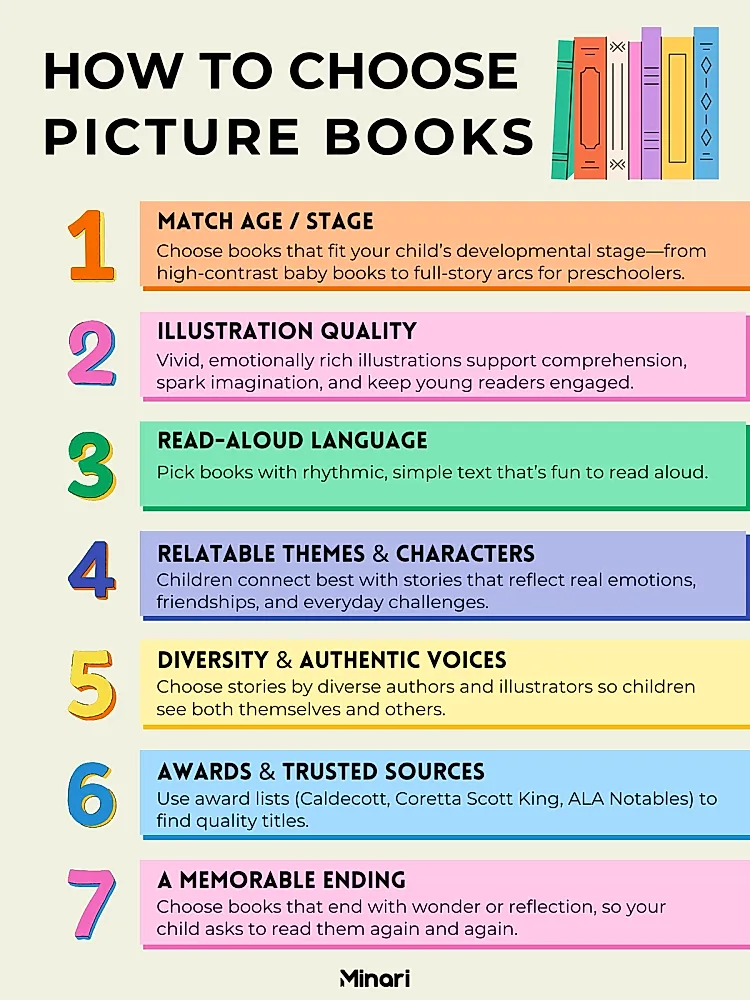
1. Relatable Characters & Engaging Plots
- Example: The Smart Cookie by Jory John (self-doubt and confidence) or We Don’t Eat Our Classmates by Ryan T. Higgins (emotional humor).
- Why it helps: Children connect most with stories that mirror their feelings and experiences. The best picture books for kindergarteners build empathy, confidence, and emotional vocabulary through familiar situations.
2. Vibrant, Meaningful Illustrations
- Example: The Very Hungry Caterpillar by Eric Carle uses bold color and simple forms; Big by Vashti Harrison shows emotional growth through changing scale and tone.
- Why it helps: Research shows that during shared reading, children focus heavily on illustrations. Clear, purposeful artwork supports comprehension and makes picture books for children both educational and captivating. (Nature Human Behaviour, 2020)
3. Simple, Rhythmic, Conversational Language
- Example: Brown Bear, Brown Bear, What Do You See? (repetition), Don’t Let the Pigeon Drive the Bus! (humor & dialogue), and The Smart Cookie (encouraging phrases).
- Benefit: Great children’s picture books use rhythm and repetition to support phonemic awareness, memory, and joyful participation—especially for early readers.
4. Diversity and Authentic Voices
- Example: Julian Is a Mermaid by Jessica Love; Other Words for Home by Jasmine Warga; and new indie picture books highlighting underrepresented creators.
- Data: The Cooperative Children’s Book Center (CCBC) reported that in 2023, 49% of books it received featured significant BIPOC content and 40% included at least one BIPOC primary character. (IFLA Blogs)
- Why it matters: The best picture books for children show both mirrors and windows—helping kids see themselves and understand others, which fosters empathy and curiosity.
5. The Power of Reading Aloud
- Reading aloud—even 15 minutes a day—boosts vocabulary, comprehension, and school readiness. (United Through Reading)
- Programs like Reach Out and Read show measurable language gains for families who share books regularly. (Reach Out and Read)
- Good picture books make reading aloud easy: lively rhythm, expressive art, and stories that spark conversation.
✨ If you’d like a curated set that combines beautiful art, diversity, and read-aloud magic, the Lola Lamb Gift Set brings together some of the best picture books for kids ages 3–6—perfect for home libraries or gifts.
Choosing by Age: What Parents Should Prioritize
Infants (0-12 months)
Features to Look For
Bold, high-contrast images or simple shapes; sturdy board or fabric formats; very little or no text—supports early visual development and parent-child interaction.
Book Examples & What They Teach
Black on White by Tana Hoban: designed for newborns/young infants with black-and-white images.
Toddlers (1-3 years)
Features to Look For
Repetition, sound play, lift-the-flap or interactive elements, bright visuals; helps language building, engagement, and motor skills.
Book Examples & What They Teach
Dear Zoo by Rod Campbell: classic toddler lift-the-flap, simple text, interactive fun.
Brown Bear, Brown Bear, What Do You See? by Bill Martin Jr. & Eric Carle: predictable text, aids pre-reading and color/animal concepts.
Preschoolers (3-5 years)
Features to Look For
More complete narrative structure (beginning-middle-end), humor, a cast of characters, imaginative elements, emerging themes of emotion and culture.
Book Examples & What They Teach
Julian Is a Mermaid by Jessica Love — identity/emotion themed.
The Very Hungry Caterpillar by Eric Carle — conceptual vocabulary, full narrative arc for age 2-5.
Kindergarten / Early Readers (5-7 years)
Features to Look For
Picture books (or early readers) with richer themes (school, social issues, independence), more text, relatable situations for early read-aloud or independent reading.
Book Examples & What They Teach
The Smart Cookie by Jory John — self-confidence theme for early elementary.
Big by Vashti Harrison — emotional growth & imaginative visuals for slightly older picture-book audience.
Popular Children’s Picture Books in 2025
These are the best picture books for kids parents are talking about in 2025—bestsellers, hidden gems, and stories that combine heart, humor, and beautiful art.
- The Smart Cookie by Jory John & Pete Oswald – Confidence, self-worth, and lively art; part of the Food Group series (HarperCollins).
- Big by Vashti Harrison – Deep emotion and stunning illustration; a Coretta Scott King Illustrator Honor Book (2024).
- A Magical Christmas Eve by Kathleen Whitham – Rising indie title gaining traction in parent creator circles.
- I Can Help! by Sol Regwan – Short, uplifting, and perfect for preschoolers learning empathy and kindness.
- Julian Is a Mermaid by Jessica Love – Beautifully explores identity and imagination; loved by readers ages 3–6.
💡 For families seeking thoughtfully curated children’s picture books, the Lola Lamb Gift Set bundles these qualities—perfect for gifting, bedtime routines, or starting a meaningful home library.
Picture Book Genres Parents Love
- Adventure & Fantasy – Magical stories, quests, and talking animals spark imagination in young readers.
- STEM & Informational – Science and nature titles like Ada Twist, Scientist inspire curiosity and real-world learning.
- Biographies & Inspirational Stories – Picture books for children that highlight artists, scientists, and trailblazers help kids see what’s possible.
Tips for Finding High-Quality Picture Books
- Check award lists & curated guides
- Look to trusted sources such as ALA Notable Children’s Books, Coretta Scott King Awards, and Bank Street College’s Children’s Book Committee.
- Browse parent-curated lists like the 100 Picture Book List 2025 for new and diverse recommendations. 🔗 ALA Notables | Bank Street College
- Ask librarians, teachers, and trusted reviewers
- Local librarians and teachers know which picture books for kids truly resonate in classrooms.
- Bookstagram reviewers and parenting bloggers are great for discovering indie favorites.
- Choose diverse authors & illustrators
- The CCBC reported that in 2023, 49% of books had significant BIPOC content and 40% featured a BIPOC main character. (IFLA Blogs)
- Authentic voices help children build empathy, identity, and cultural awareness.
- Make reading aloud a daily habit
- Even 15 minutes a day improves vocabulary and emotional connection. (Scholastic Reading Report)
- The best picture books are those that invite laughter, questions, and shared joy.
- Balance genres & mix classics with new releases
- Combining well-known children’s picture books with fresh indie stories keeps reading both familiar and exciting.
Personalized Picture Books: When They’re Worth It
- Why they matter: Personalized picture books make your child the hero—boosting engagement and memory.
- Examples: Verified services like Wonderbly and Blurb.
- Considerations: These tend to cost more and take longer to ship; best used to complement a core library of high-quality picture books for kids.
Resources for Parents
- Common Sense Media – Age-based ratings and reviews.
- Scholastic Editors’ Picks – New and seasonal children’s picture books.
- ALA Notables – Annual list of the year’s best books.
- Bank Street College Children’s Book Committee – Expert recommendations by theme and age.
- CCBC Diversity Statistics – Research on author and character representation in children’s literature.
Bringing It All Together
The best children’s picture books inspire wonder and connection. They combine expressive art, rhythmic language, and meaningful themes that help kids understand themselves and the world.
Whether you’re choosing award-winning titles, discovering indie gems, or exploring personalized stories, every great picture book helps raise thoughtful, imaginative readers.
✨ Make the search simple—discover stories that spark joy and learning with the Lola Lamb Gift Set, a curated collection of beautifully illustrated picture books for kids ages 3–6.